
#194 From Vipers to Zaza: A Century of Cannabis Slang

#194 From Vipers to Zaza: A Century of Cannabis Slang
Cannabis has more nicknames than almost anything else you can legally buy in Canada. That isn't an accident. For most of the last hundred years, saying the real word out loud could cost you a job, a lease, or a criminal record, so people made up code. Then the code took on a life of its own.
Follow the slang and you get a decent history of the plant. Who used it, who chased them, and what was worth naming.
The 1920s and 30s

The first big batch of slang came out of jazz. Harlem in the late twenties had around 500 "tea pads," small back rooms where a rolled joint went for about twenty cents. The regulars called themselves vipers. Cannabis was called tea, gage, muta, muggles, or Mary Jane, depending on the city.
Musicians put the code right on the record labels, which is why we can date so much of it. Louis Armstrong cut a track called "Muggles" in 1928. Cab Calloway recorded "The Reefer Man." To learn what a word meant in 1932, you could check the charts.
Nobody is sure where "reefer" came from. The Online Etymology Dictionary dates it to the 1920s and gives two options: the Mexican Spanish word grifo, or the sailing term "to reef," since a rolled joint looks like a rolled sail. The sailing theory is more charming. The Spanish one is more plausible, given how much early cannabis slang filtered through Spanish.
About the word "marijuana"
You've probably seen the version that goes around online. American prohibitionists picked the Spanish word to make the plant sound foreign and pin it on Mexican immigrants. There's truth in that. Before 1900, US papers wrote "cannabis." After 1900, "marijuana" starts showing up in wild stories about violence.
The neat version leaves things out. NPR's Code Switch found that nobody knows where the word came from, with theories running from a Chinese phrase respelled in Spanish to a Bantu word carried over by Angolan slaves. They also found Mexican papers running the same scare stories first. Messier than the meme, and messier is usually closer to true.
The 1940s and 50s
"Pot" dates to about 1938, probably a short form of the Mexican Spanish potiguaya, meaning marijuana leaves. It has outlasted everything else here. Your grandmother knows it. It survived Reefer Madness and still turns up in headlines.
The 1960s and 70s
The counterculture went plain. "Grass" is about as simple as slang gets. It's green, it grows. "Roach" for the end of a joint comes from this stretch as well.

"Bogart" is one of the few cannabis slang terms with a traceable birthday. The Fraternity of Man copyrighted "Don't Bogart That Joint" in January 1968, and Easy Rider brought it to the mainstream the following year. The term nods to Humphrey Bogart's habit of letting a cigarette dangle from his lips between takes, holding it, but never really smoking it.
And then there's 420. No term in cannabis history has collected more myths. In the fall of 1971, five students from San Rafael, California, known as the Waldos, got hold of a treasure map to an abandoned cannabis crop. They agreed to meet at a wall near their school at 4:20 p.m., after practice, and go looking for it. They never found the plant, but they kept using the number. Their connections to the Grateful Dead carried it into the touring scene, and High Times eventually spread it worldwide.
It is not a police code. It is not the number of chemicals in cannabis. It is not Hitler's birthday. The Waldos keep the original letters and flag in a bank vault, better proof than most origin stories can offer.
The 1980s
Once growing moved indoors, the words moved from the drug to the plant. People started saying bud, flower, nugs, sinsemilla. "Skunk" named a smell so specific it turned into a category.
Canada gets its own entry here. "BC Bud" stopped being a description and became a reputation, one of the few cannabis terms that names a place and means quality.
"Kush" came in through genetics, from the Hindu Kush mountains on the Afghanistan and Pakistan border. Wild plants from there came west and the name travelled with them. It has since drifted off the map, which is why hundreds of strains carry it and most have never been near a mountain.
The 1990s

Dr. Dre's The Chronic dropped in 1992 and put the word in rotation across North America. Snoop Dogg claimed they misheard "hydroponic," landed on "hydro-chronic," and the short form stuck. Dictionary.com traces "chronic" back to the late 1940s, where it described a heavy user, suggesting it may have climbed to "very good" on its own. Two plausible origin stories, one landmark album that made the debate irrelevant.
"Blunt" comes from the Phillies Blunt cigar. "Dank" used to mean unpleasantly damp before it got flipped into a compliment.
The 2000s and 2010s
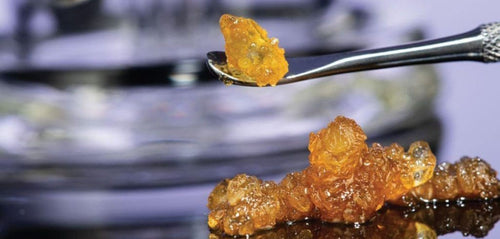
Concentrates arrived with a different naming habit. Shatter, wax, budder, live resin, sauce, diamonds. None of it is code. Nobody invented "shatter" to hide anything from a landlord. They named it for what the stuff does when you drop it.
Legal shops pushed the same way. Terpenes, the oils that give each plant its smell, now get printed on the label. After a century of hiding, the words got more exact instead of less.
The 2020s
Today's slang grades by smell. "Loud" means strong enough to announce itself through a bag. "Gas" points at the fuel end of the range. "Za" and "zaza" came up through hip hop for the expensive stuff, though the word also gets stuck on unrelated products, so know what you're buying.
What we call it now
Legalization did something a century of prohibition never managed. It made the plain word usable. You can walk into a store, say "cannabis," and nobody flinches. Not all the old words deserve to come along. "Stoner" and "pothead" were built to make people look small, and they did the job for decades. Those can stay behind. The funny ones, invented by musicians and growers who needed a word and made one up, are worth keeping around.
Cannabis has found its rightful place, and with it, a language that respects its history and embraces its future.
Related Posts
-

#188 Too High? A Calm, Practical Guide to Coming Down
You had one more than you should have, and now the room feels like it's keeping tabs on you. Your heart is racing, yo...
-

#187 Cannabis and Camping: Your Guide to Enjoying Canada's Outdoors
Few things pair as naturally as a campfire and a slow evening with nothing you have to do. Add cannabis to the mix an...
-
#186 Concentrates Made Simple: A Guide to Every Major Type
Of all the categories on a cannabis menu, concentrates come with the most vocabulary. Live resin, cured resin, distil...


